MCM Overhead Chain Conveyors - Operating Principles
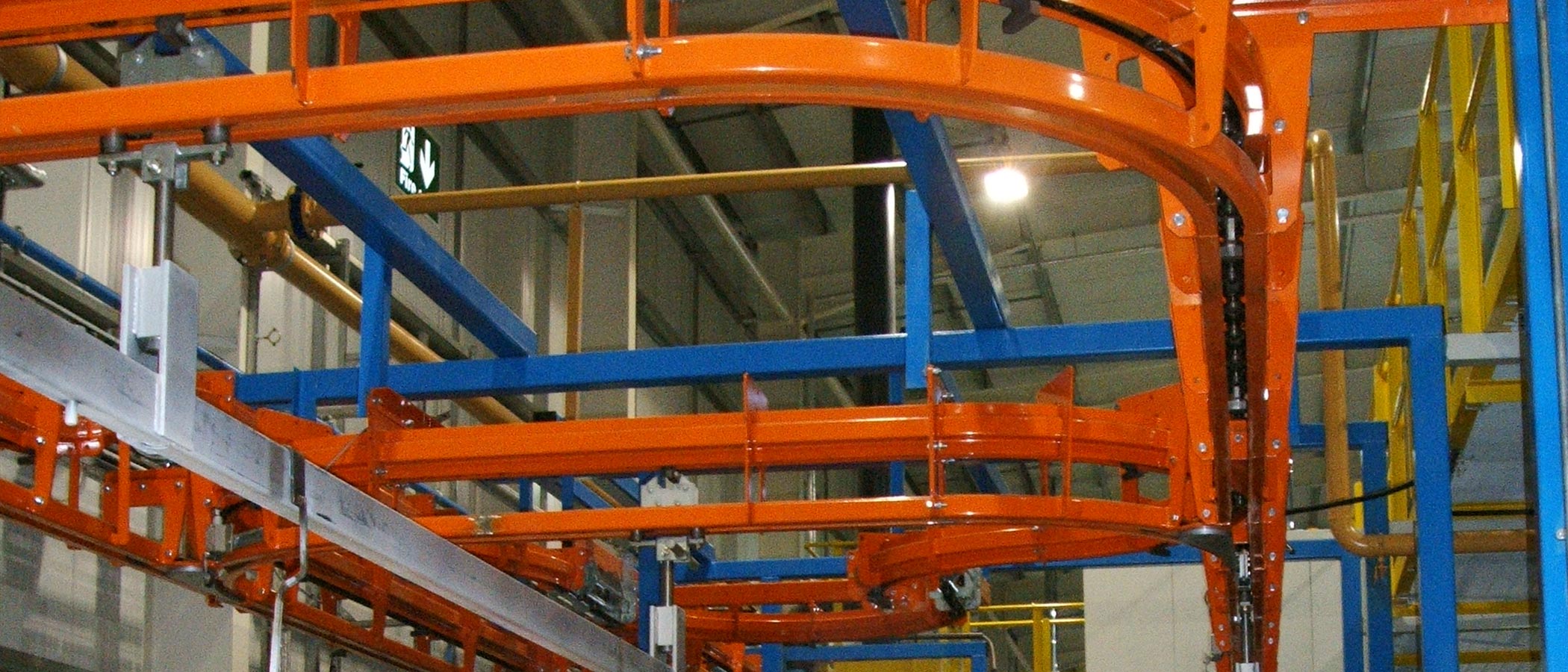
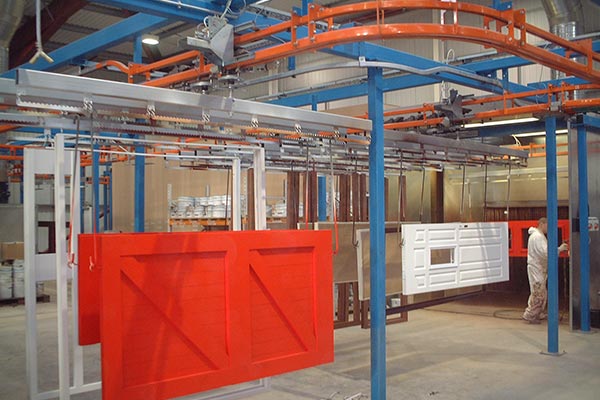
The principle of overhead chain conveyors is that they utilise a continuous powered chain running in a track. Fitted to the chain at regular intervals are pendants from which the products to be carried are suspended either directly or by means of load-bars or purpose made carriers. Instead of pendants, 'dogs' may be fitted to the chain in order to push trolleys along a second track normally mounted underneath the chain track. The products to be conveyed are in turn suspended from the trolleys. This type of overhead conveyor system is termed 'Power & Free'.
The modular design of these systems, combined with a range of standard accessories such as a selection of different radii horizontal and vertical bends, spinners, indexers, automatic load-unload units etc., enables them to be easily configured to suit the most complex layout requirements of any manufacturing and assembly process. Installation is quick and easy and the modular design also allows later extensions and system rearrangements to be undertaken.
MCM Autotrack Power & Free - Operating Principle
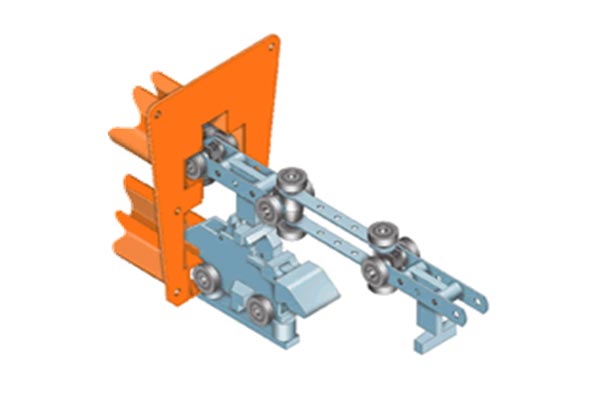
Unlike conventional monorail chain conveyors where the product loads are attached via pendants directly to the powered bi-planar chain running within a single track, the operating principle of a Power & Free conveyor system is that it utilises a number of trolley assemblies free running in a second track formed from twin channel sections. These wheeled trolley assembles, which carry the product load, are driven around their track by a single or multiple bi-planar powered conveyor chains fitted with ‘pusher dogs’ running in their own enclosed tracks.
The chain tracks are mounted above the trolley track and joined to it by means of track clamps/flanges. It is this design concept of a separate power chain track and a free trolley track that affords the MCM Autotrack range of conveyors their great versatility enabling them to be tailored to the demands of virtually all manufacturing environments. The generic term ‘Power & Free’ also derives from the two track concept.
Frequently Asked Questions About MCM Overhead Chain Conveyor Operating Principles
An overhead chain conveyor uses a continuous powered chain running inside a track. Products are suspended from pendants attached to the chain, either directly or by using load-bars or purpose-made carriers.
Products can be suspended directly from pendants fitted to the conveyor chain or supported using load-bars and purpose-made carriers. The method used depends on the product and the handling requirements of the application.
A Power & Free conveyor uses a powered chain fitted with pusher dogs to move free-running trolleys along a separate track. The products are suspended from the trolleys rather than directly from the powered chain.
The term describes the use of separate powered and free-running elements. A powered conveyor chain runs in its own track, while free-running trolley assemblies carrying the product travel in a second track.
In a conventional monorail conveyor, product loads are attached directly to the powered chain through pendants. MCM Autotrack instead uses free-running trolley assemblies in a separate track, with powered chains fitted with pusher dogs moving the trolleys around the system.
Yes. The modular design allows systems to incorporate different radii of horizontal and vertical bends together with accessories such as spinners, indexers and automatic load and unload units. This allows the conveyor to be configured around complex manufacturing and assembly layouts.
Amber Industries lists accessories including horizontal and vertical bends, spinners, indexers and automatic loading and unloading units. These components allow the conveyor system to be adapted to different product-handling and process requirements.
Yes. The modular construction of MCM overhead conveyor systems allows later extensions and system rearrangements to be undertaken, subject to the requirements of the existing installation and the proposed changes.
MCM overhead conveyor systems are designed for manufacturing and assembly processes where products need to be transported through different stages while making effective use of available factory space. Amber Industries manufactures systems for light, medium and heavy-duty applications.