Steel Slat, Modular Plastic & Wire Mesh Belt Conveyors
The moving belts of each of these categories of conveyor have properties and features which make them suitable for particular applications. Whatever the particular application Amber Automation has a great deal of experience in designing, manufacturing and installing 'built for purpose' conveyor systems using these specialist belt types.
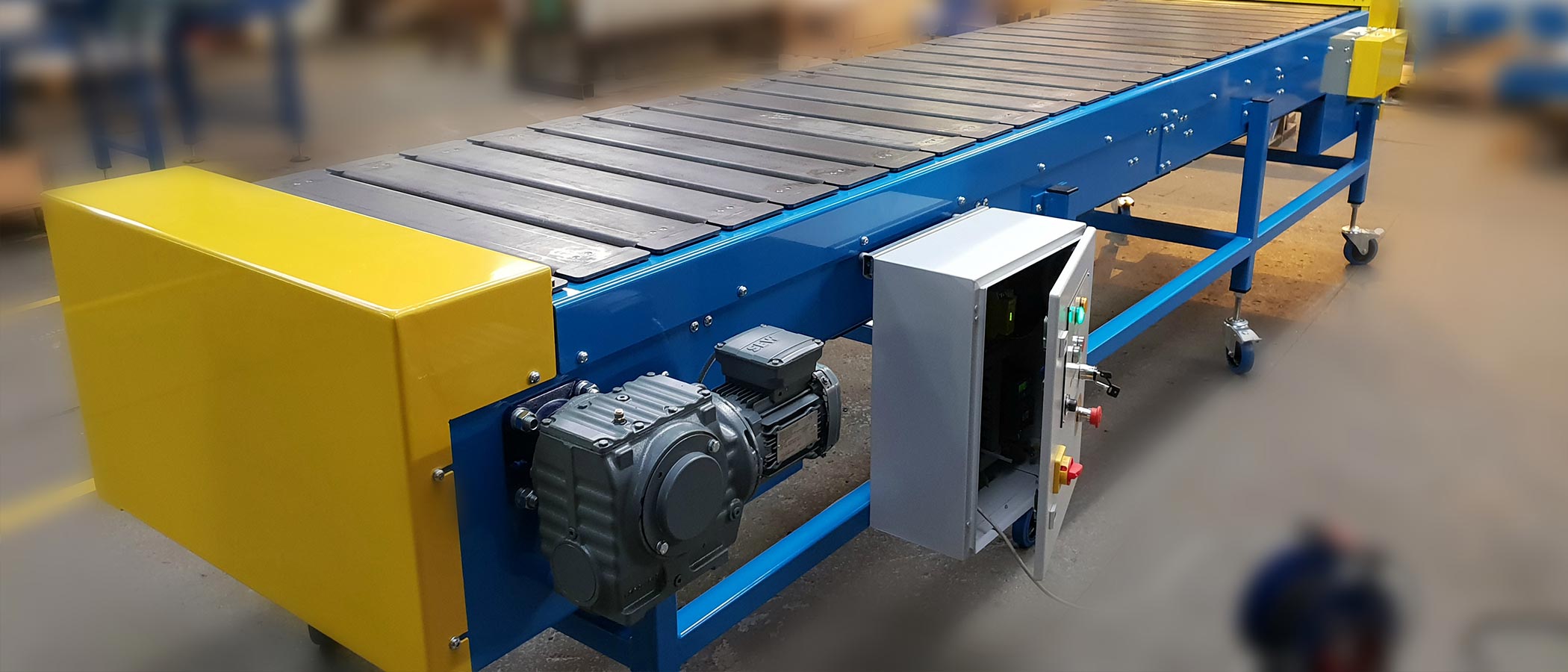
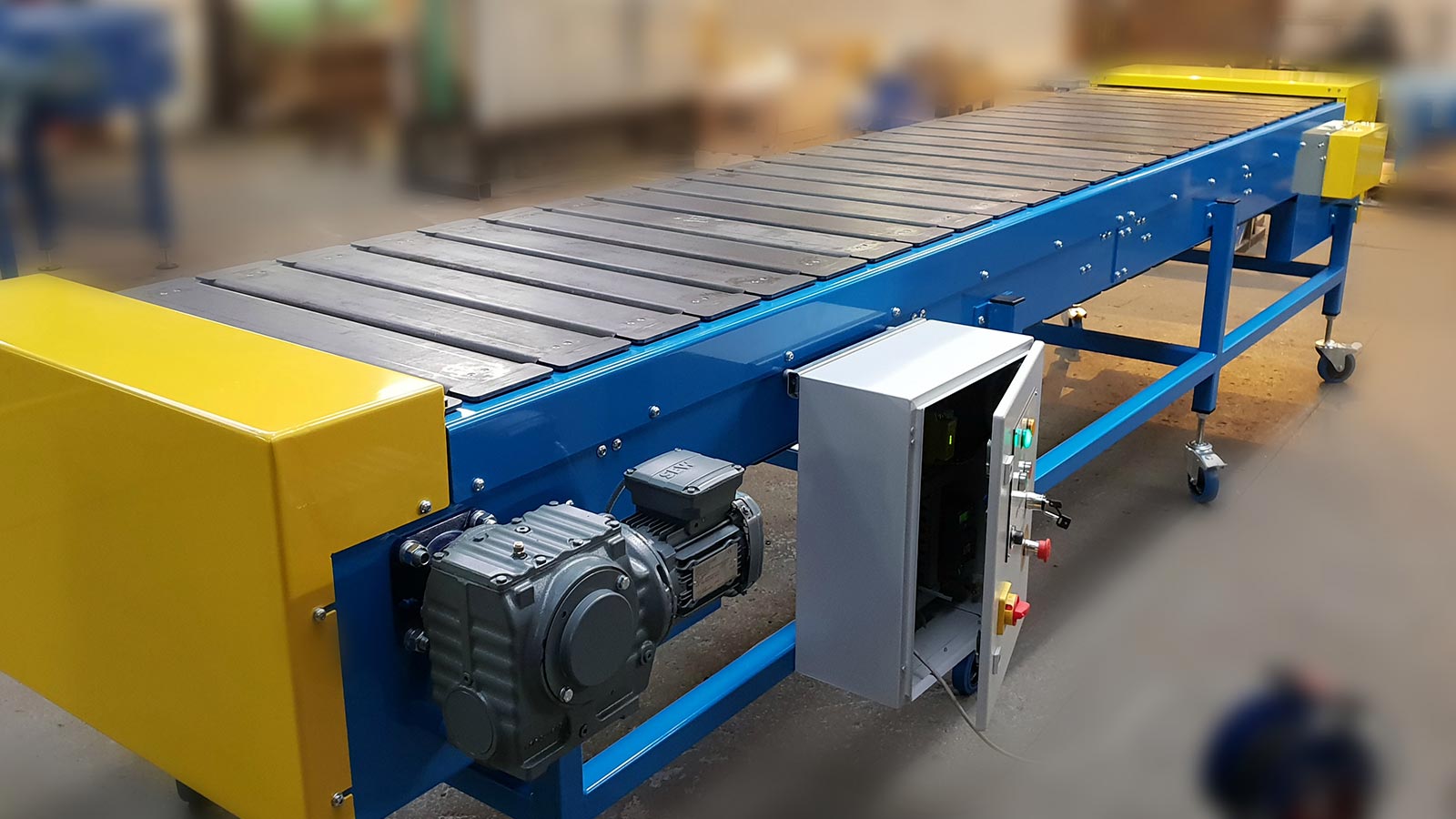
Heavy Duty Slat Conveyors
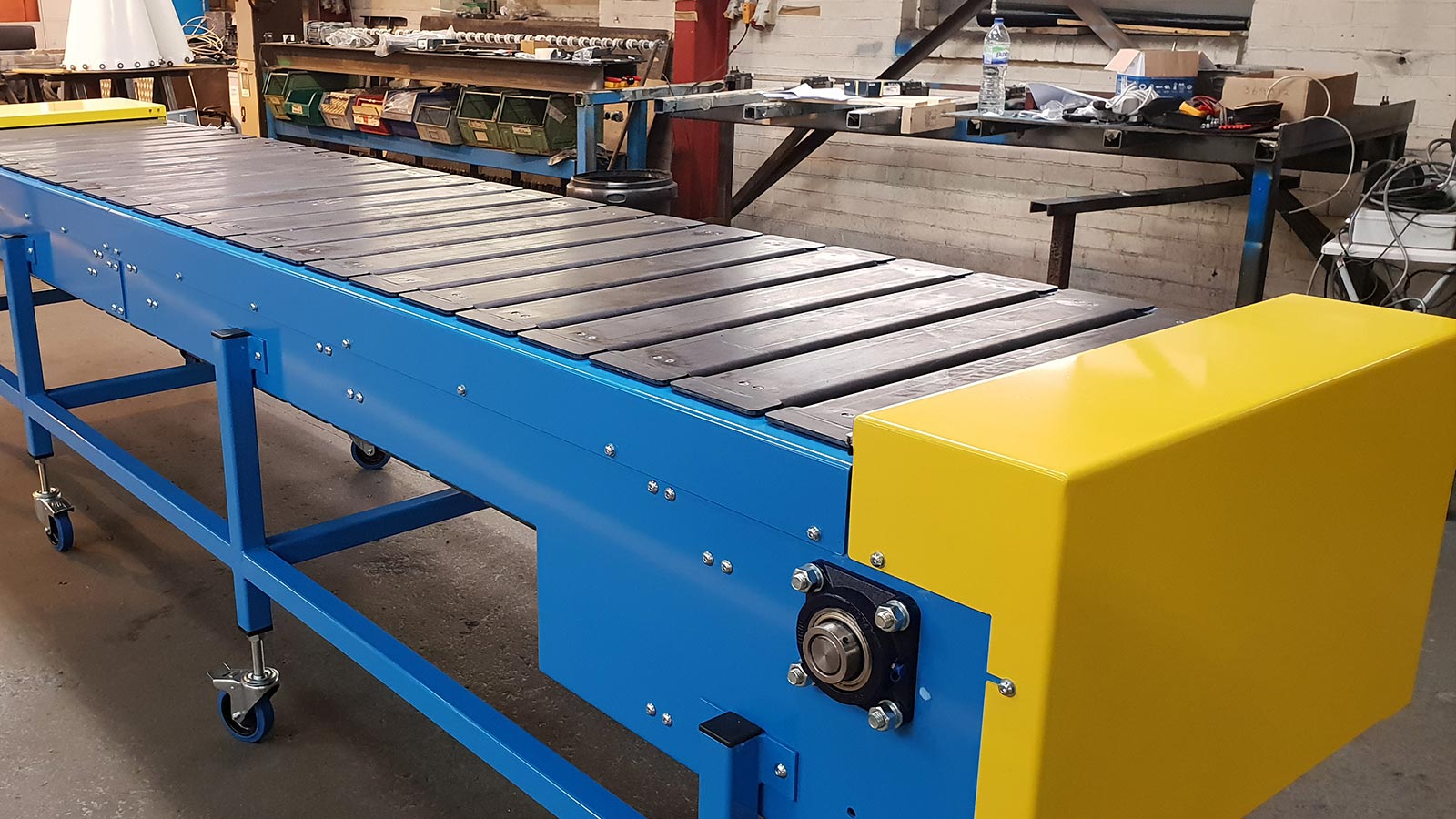
Heavy duty slat conveyors are mostly used to transport unit loads that are too heavy for traditional belt conveyors, usually at slow speeds over relatively long distances, or sometimes where the operational conditions are very arduous, such as in heat treatment plants or for high impact loading applications like scrap metal handling. They are also ideal for in-floor assembly line conveyors for the production of heavy products, for example as found in the automotive, construction plant and generator manufacturing industries, because they offer a continuous slow moving surface and require only minimal maintenance.
Each slat is attached to a pair of parallel roller bush transmission chains, one at each end of the slat and driven by sprockets coupled by a head shaft to a geared motor unit. Slats can be formed from different steel sections if required, e.g. flat plate, tubes, angles etc. and sometimes alternative materials can be used such as hardwood or moulded polymer. The selection of the width of the conveyor and the type of slat is determined by size, weight and the nature of the product being conveyed.
Slat Chain / Plate Link Conveyors
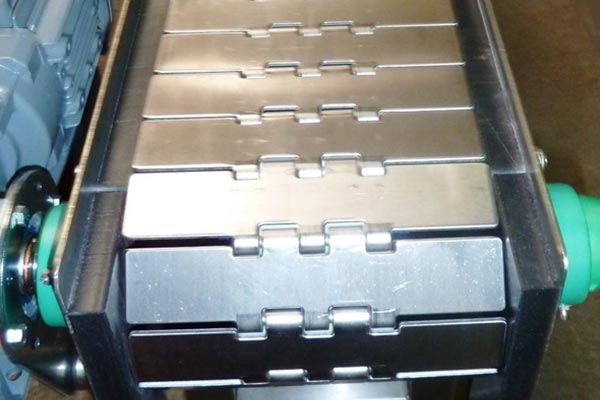
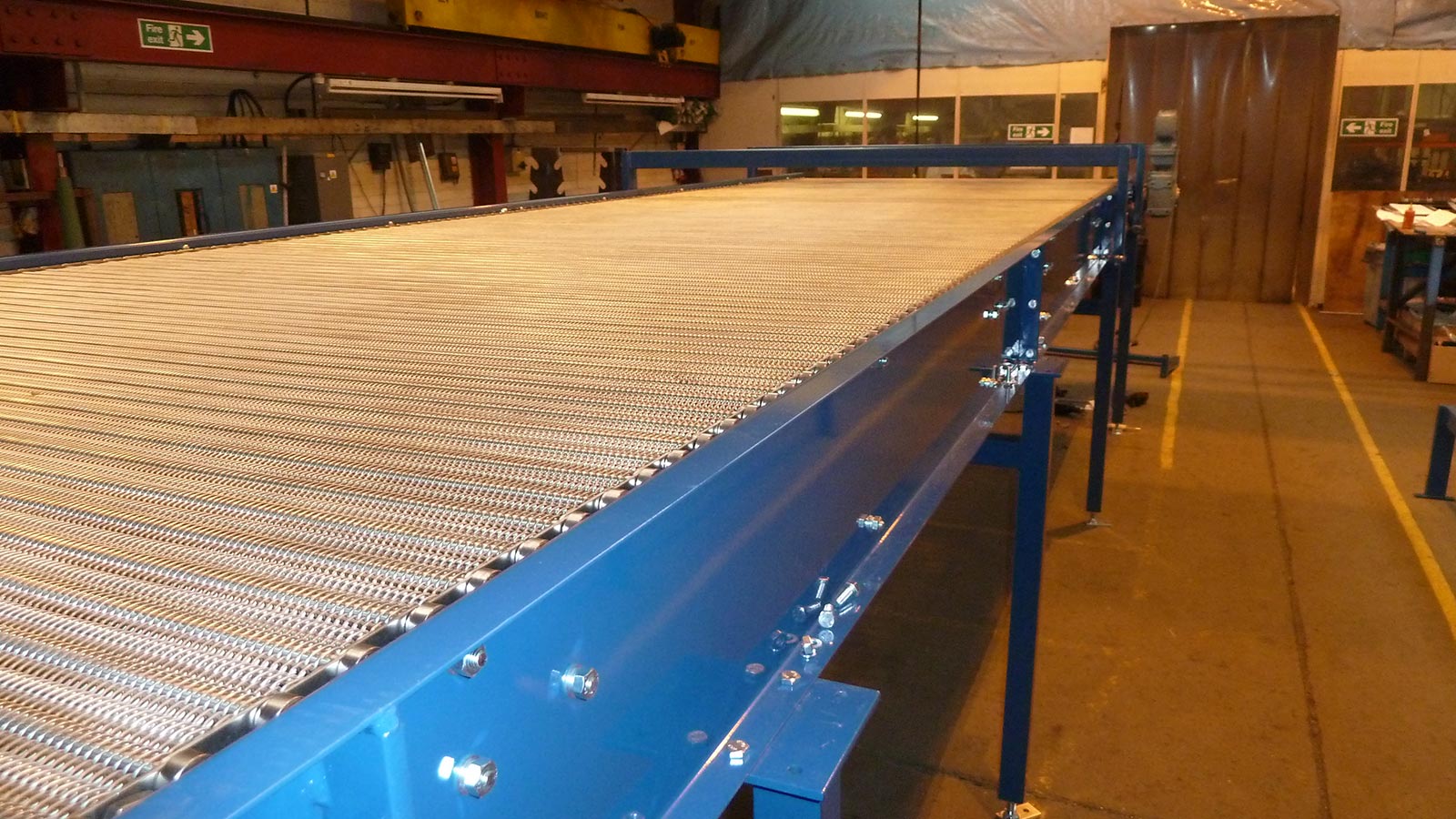
Slat chain conveyors, sometimes referred to as Plate Link conveyors are formed from a series of castellated plates (slats) rolled to form hinge points, joined together by transverse rods which pass through the hinge points. Thus the series of plates are themselves made into a chain which is also the belt of the conveyor and which broadly resembles the caterpillar tracks of an excavator. The belt is supported from underneath by sprockets which engage directly with the belt to drive it.
The slat chain / plate link belt construction can give the belt the ability to flex if the plates are joined by one hinge at the centre of their span. This provides these conveyors with the advantage of being able to gradually turn corners.
Slat chain / plate link belts can be made in mild steel which can then be surface treated by galvanising, bright zinc plating or even coating in Teflon. Stainless steel belts can also be supplied.
This type of conveyor is typically used for light to medium duty applications up to about 800mm wide and especially where there is a requirement to be able to wash down the belt.
Modular Plastic Belt Conveyors
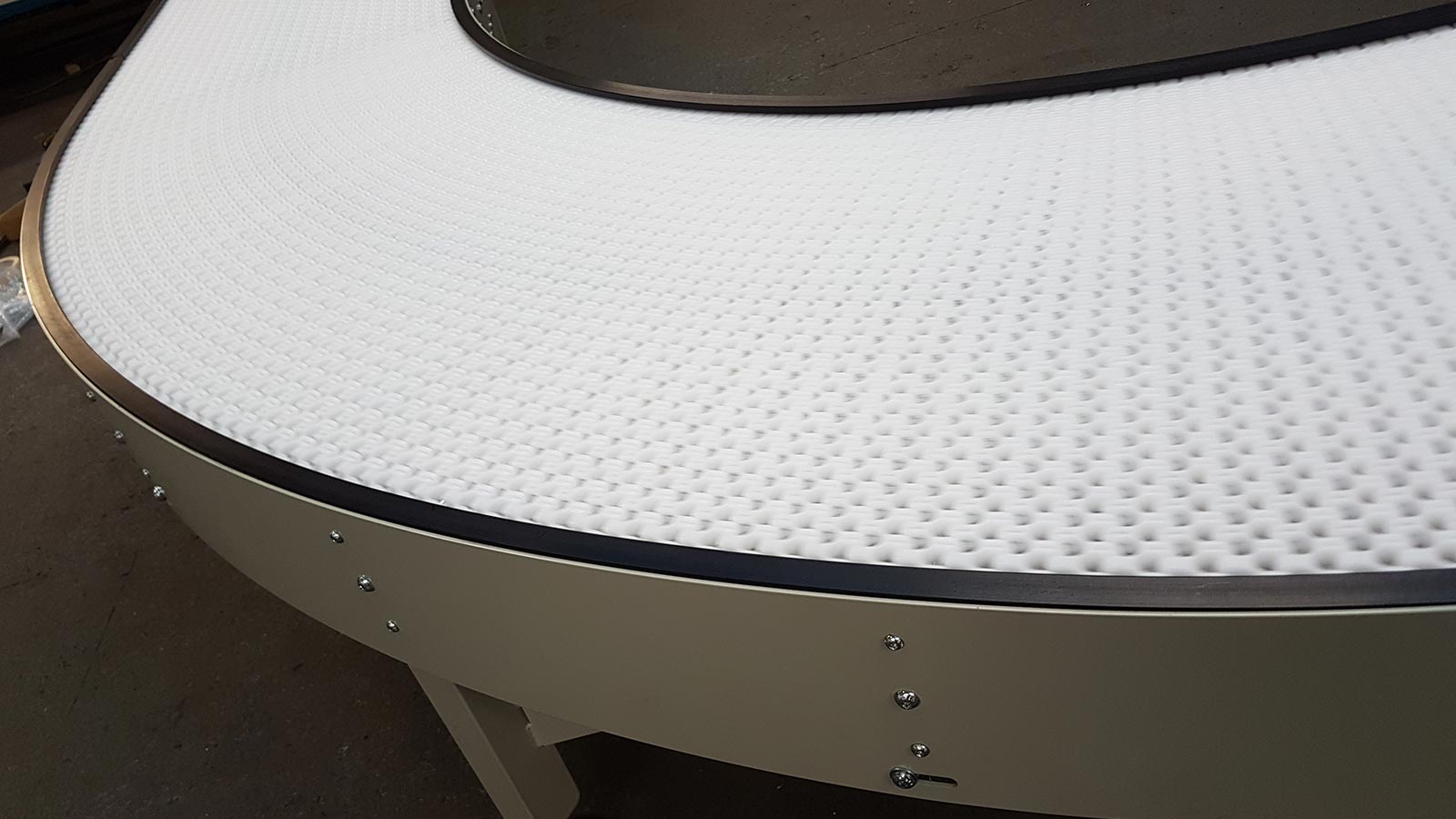
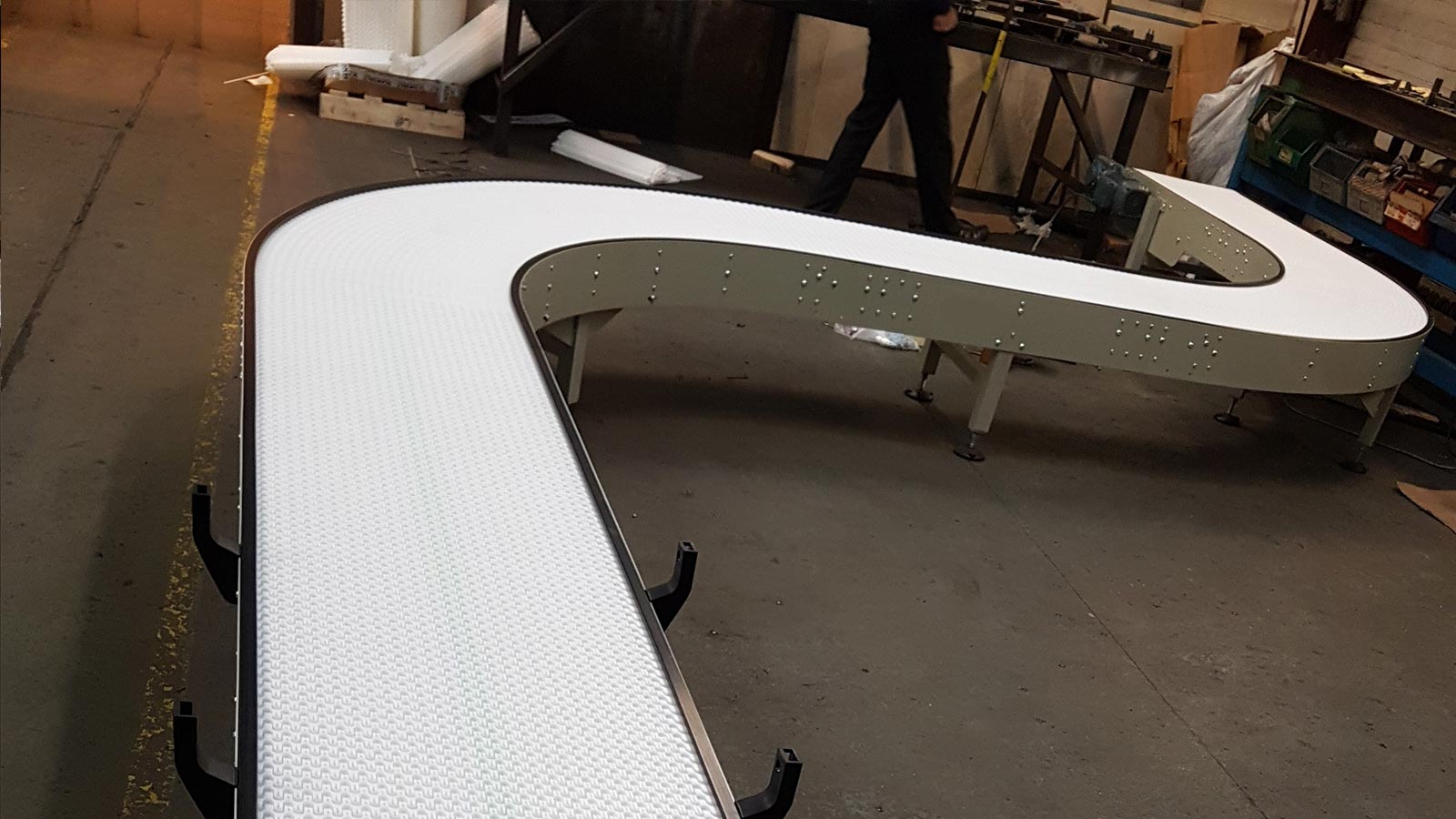
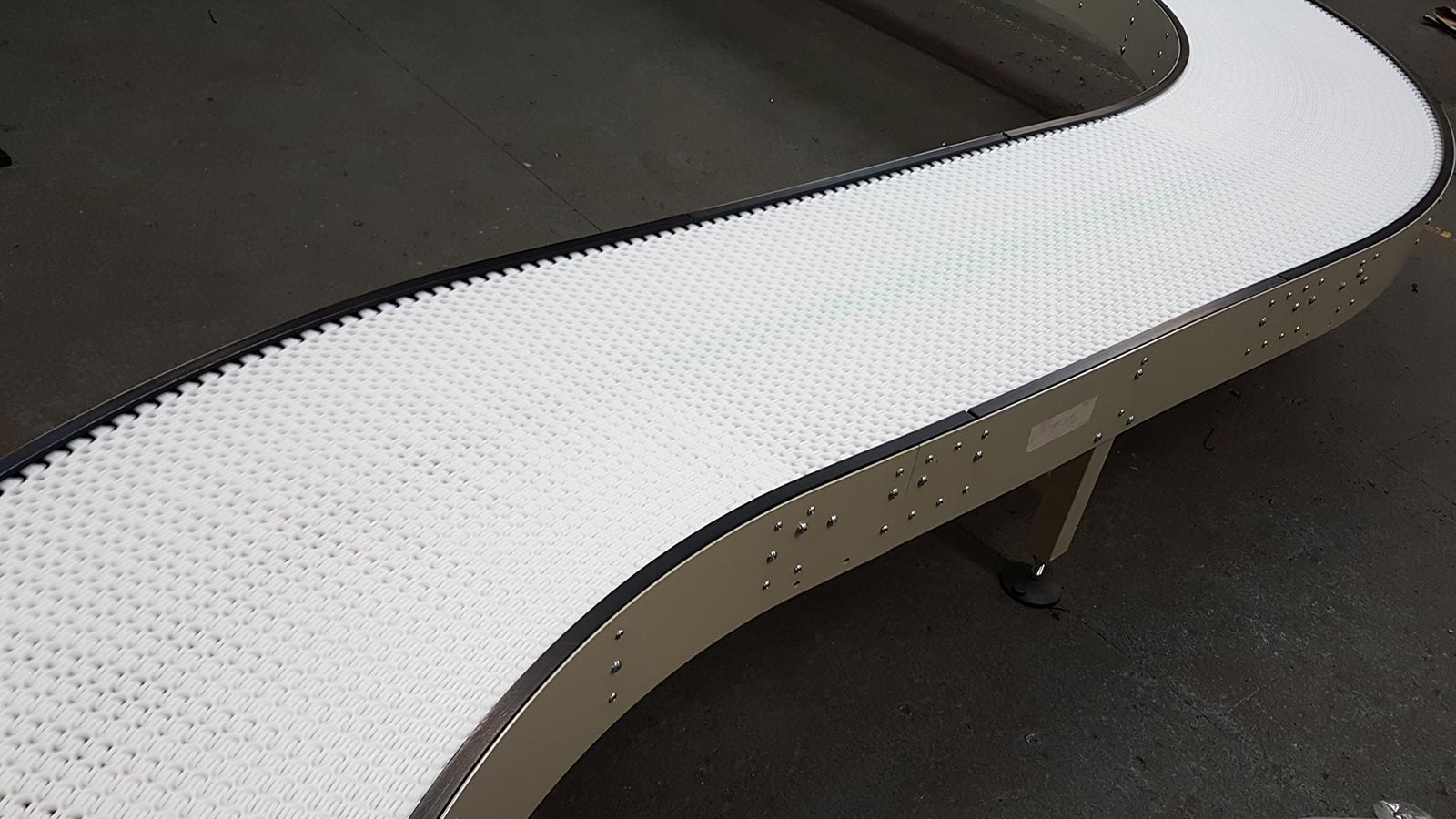
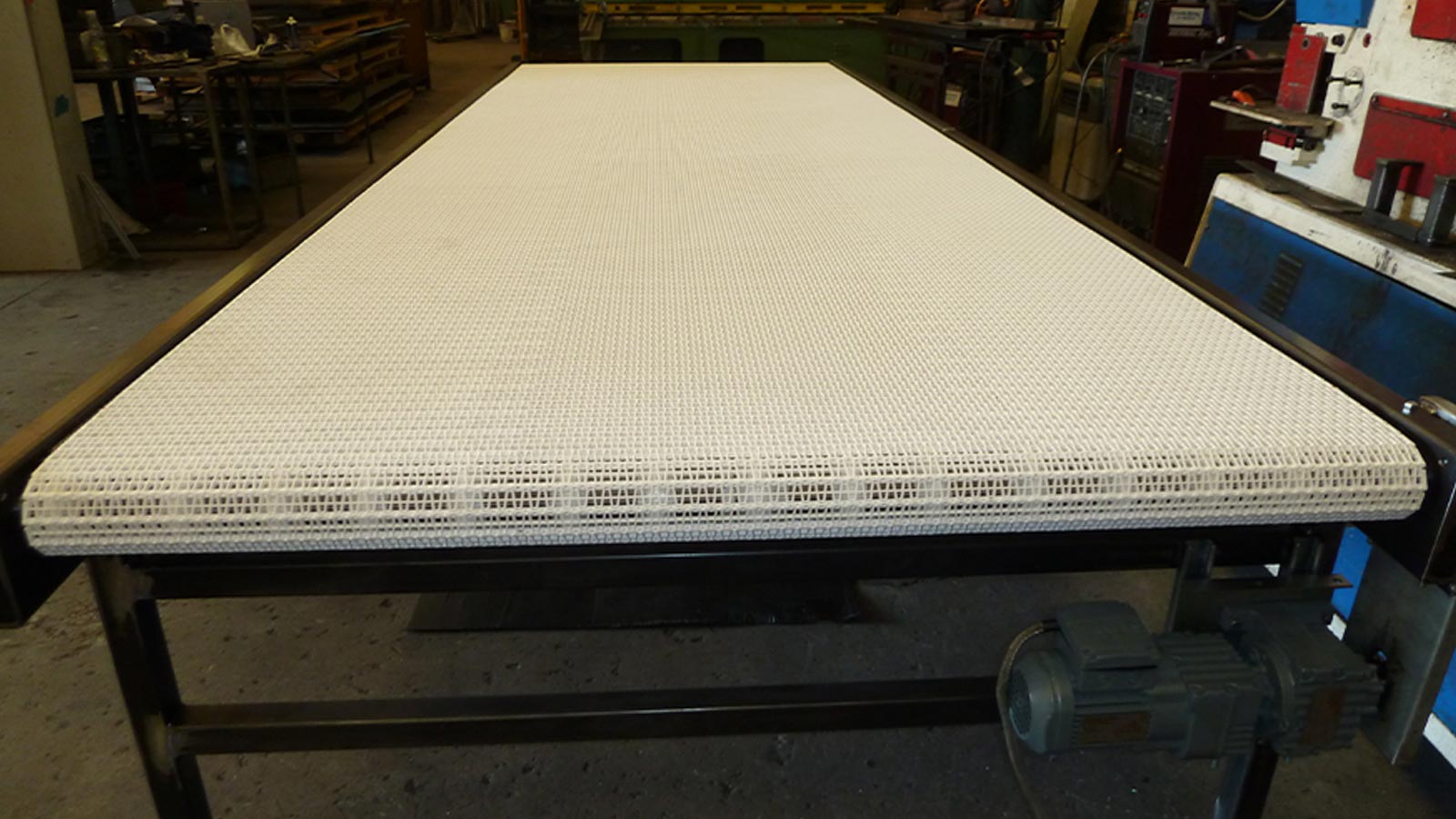
Modular plastic belt conveyors are often used in the food and pharmaceutical industries because they can be washed down, however they are extremely versatile and can be suitable for a great many applications. Plastic modular belts are made from small plastic sections which are hinged together with linking pins to form a belt, typically with a ‘chain mail’ like appearance.
The main advantage of modular plastic belts is that they allow straight lengths to be combined with a number of curves of varying radii so that several changes in direction can be made all within one continuous conveyor run. This is either too expensive or simply not possible with traditional reinforced PVC or fabric type conveyor belts. Other benefits are that they are hardwearing, capable of being used in wet environments and they are easy to repair. Should they be damaged or become worn it is a simple matter to replace a number of the plastic sections and linking pins, thereby renewing only the damaged or worn section of the belt rather than the whole belt.
One disadvantage of modular plastic belts to be aware of is that small items or loose threads and tags on the items being conveyed tend to get caught and trapped in the gaps between the plastic sections as they open and close, often with the result that they are damaged or torn off.

Wire Mesh Belt Conveyors
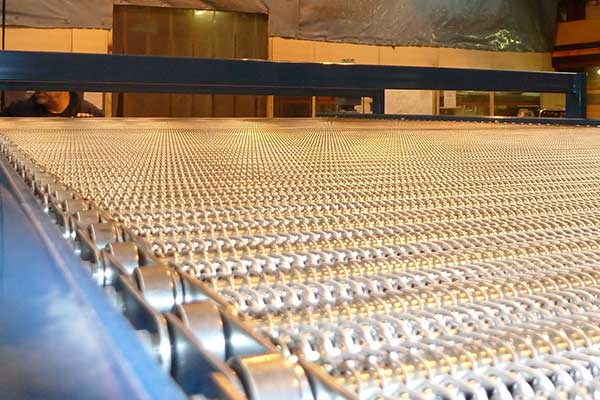
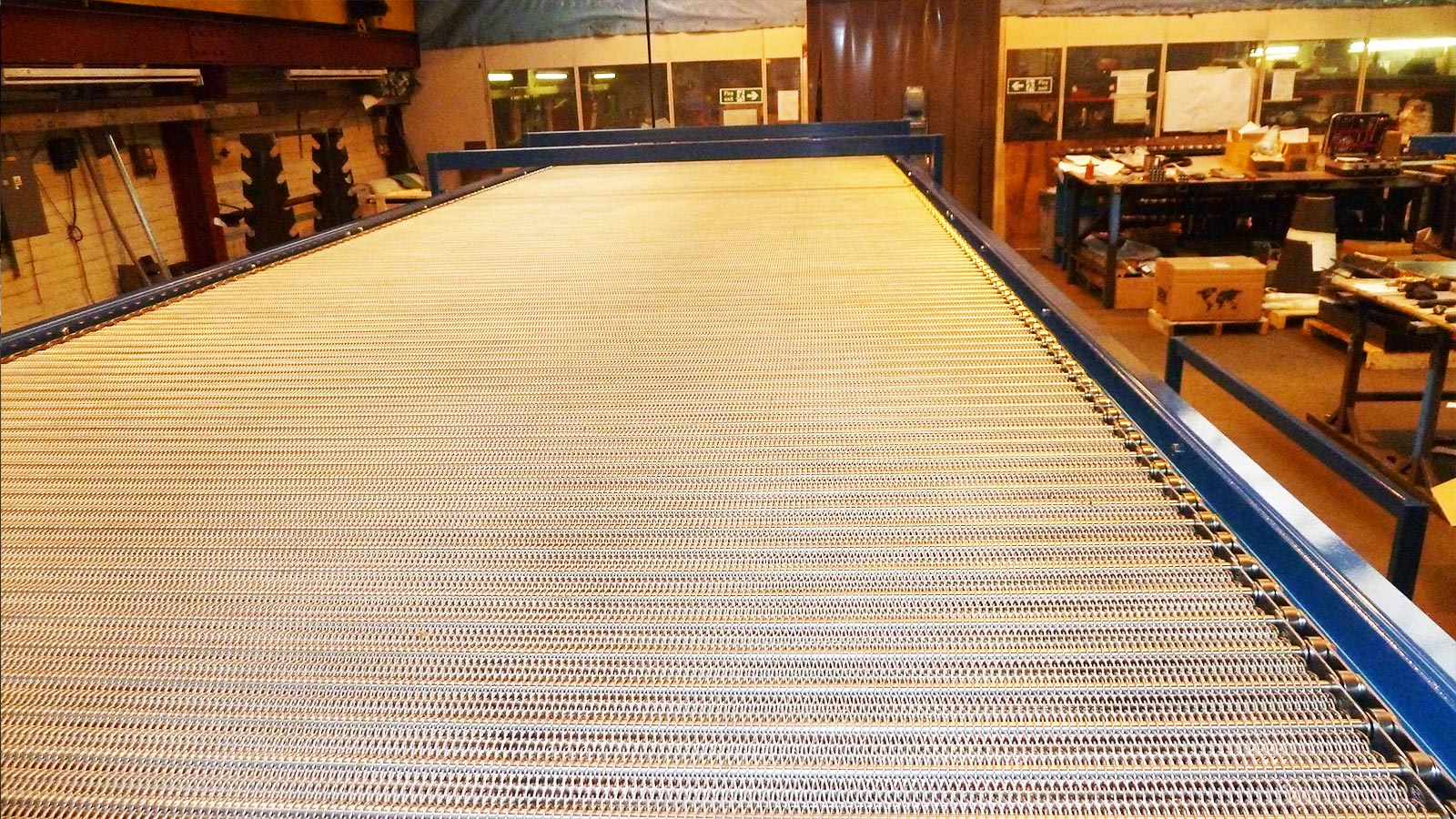
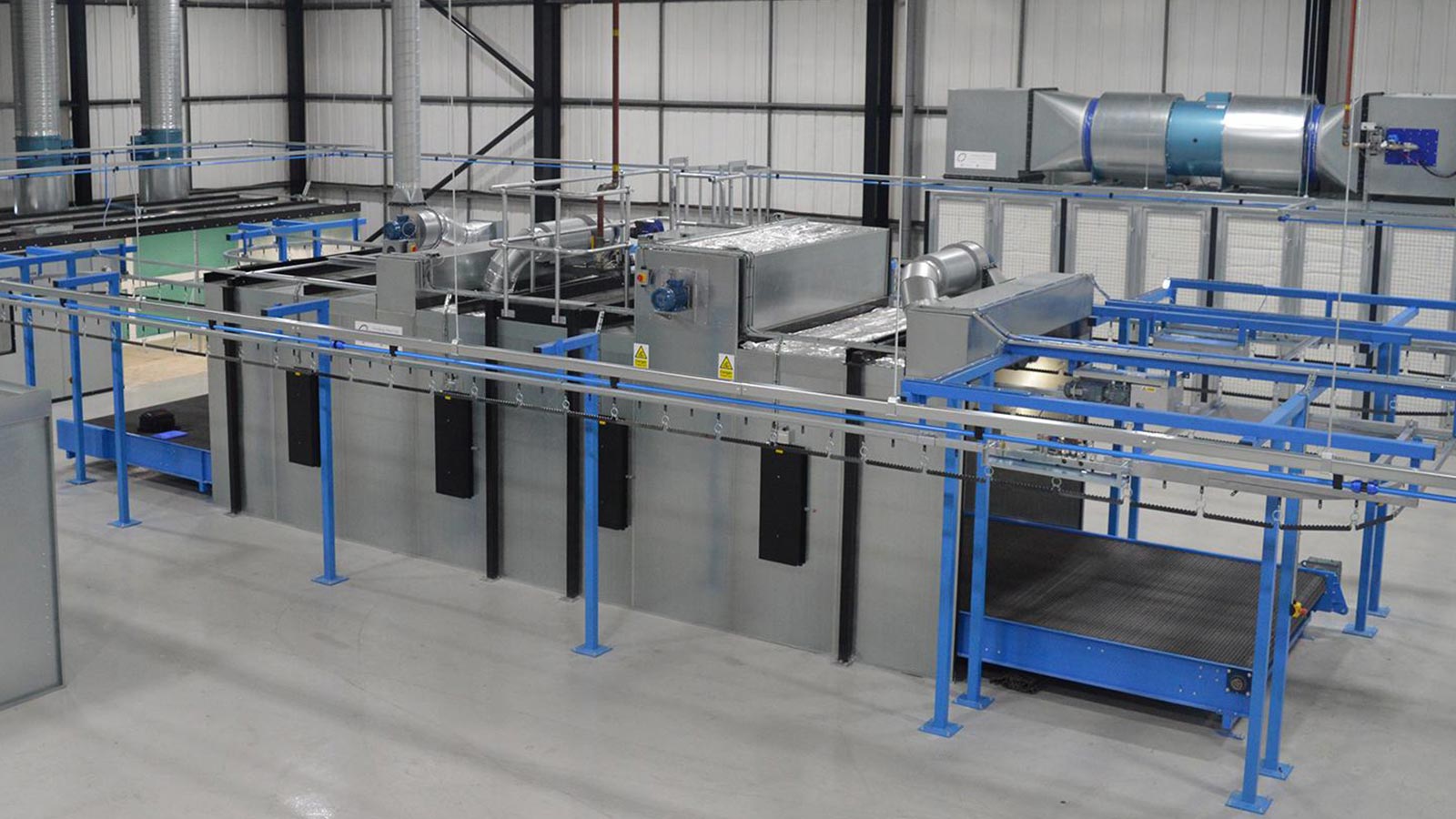
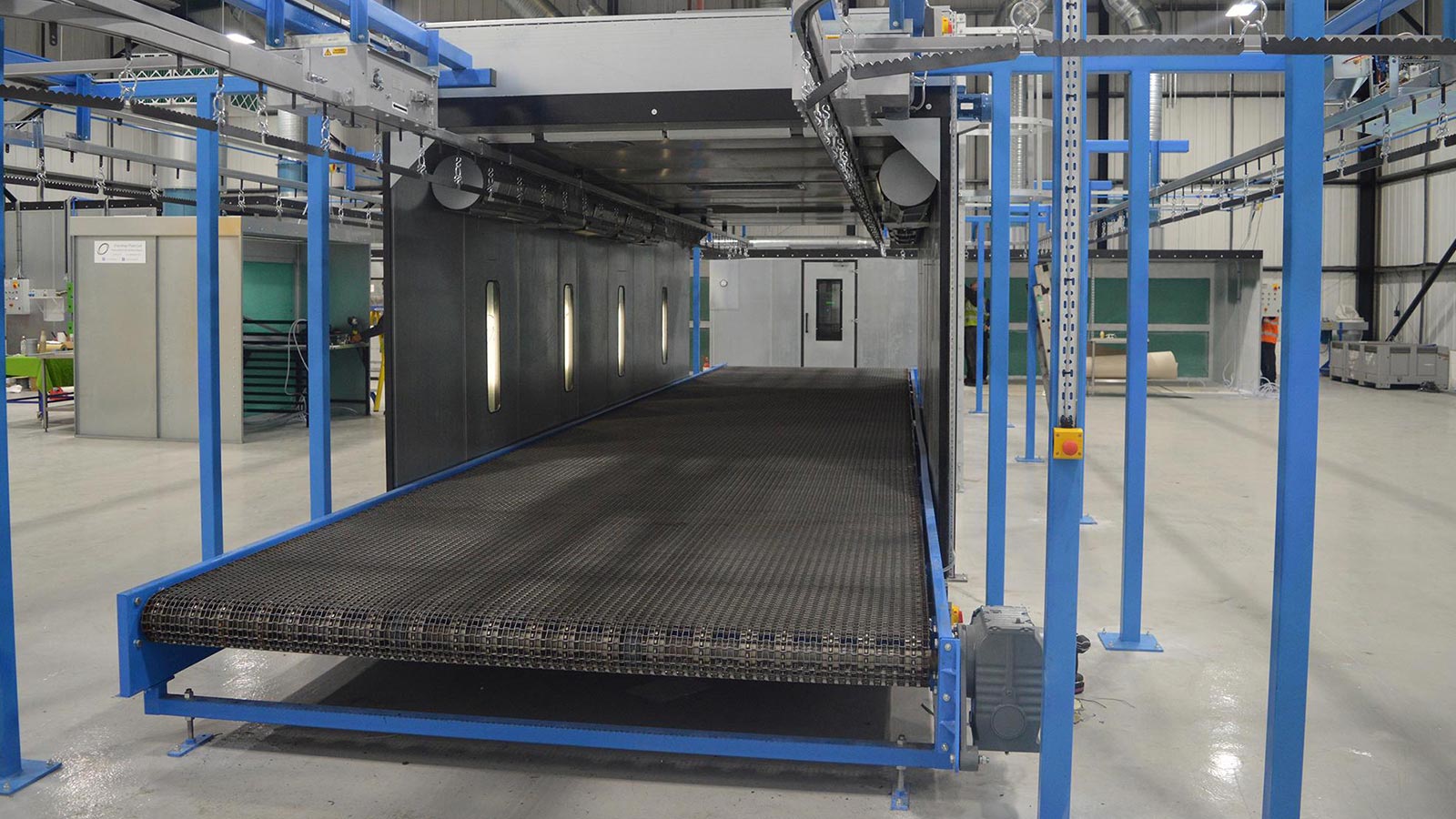
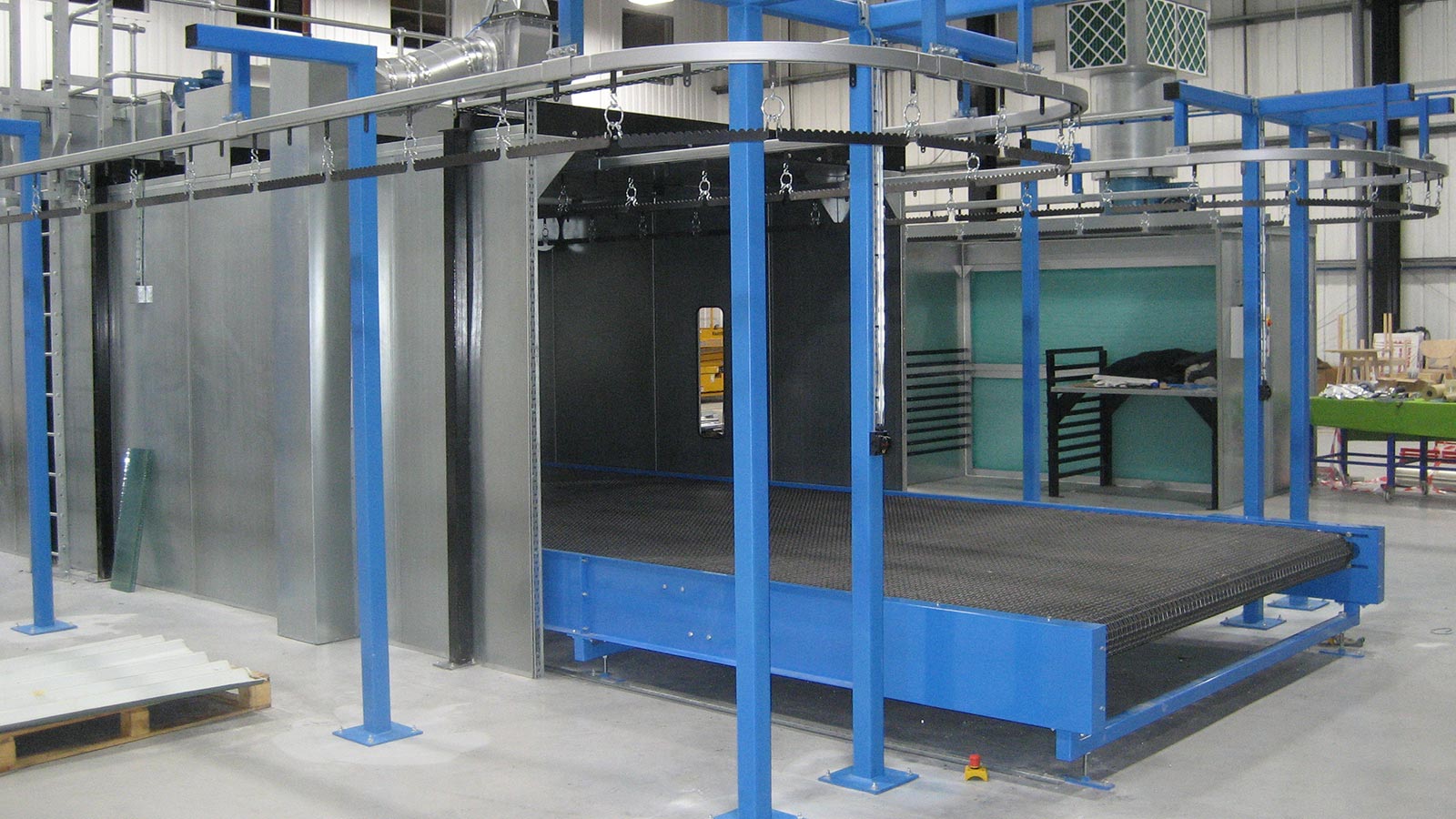
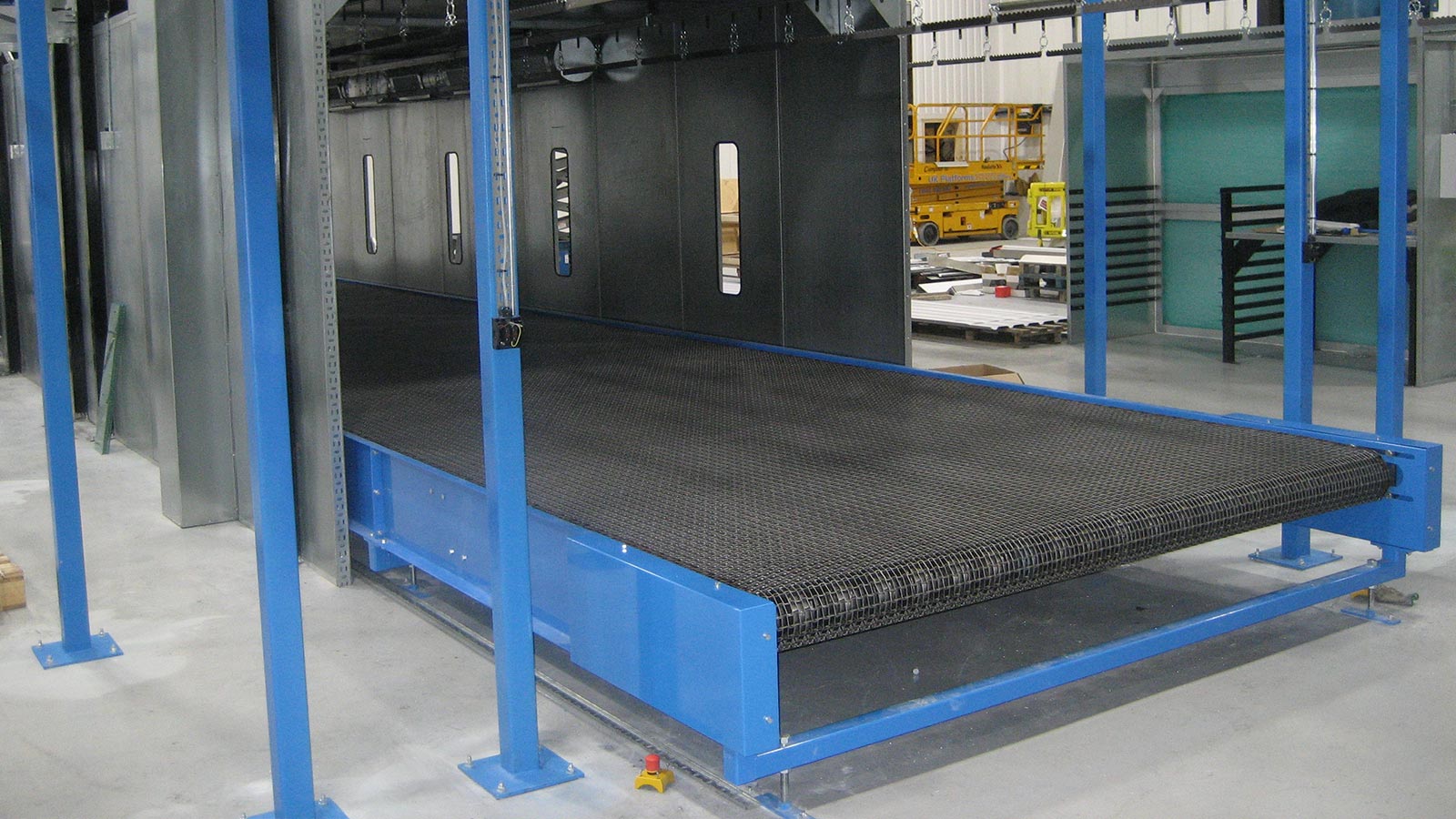
There is a wide range of steel wire mesh conveyor belts available, the correct selection of which depends on the product to be handled and the process it is undergoing.
Some wire mesh belts are very tightly knit with a high mesh density and high strength to weight ratio whereas others have an open low mesh density with wide gaps and a lower load carrying capacity.
Ultimately all steel wire mesh conveyor belts are designed to allow gas and liquid to flow through and circulate around or drain from the product whilst in transit. This makes them suitable for many applications including heating, baking, cooling, annealing, washing, draining, drying, curing, to name a few.
Amber Automation’s team of experienced engineers possess the knowledge to enable them to select the correct wire mesh belt for the application.
Frequently Asked Questions About Steel Slat, Modular Plastic & Wire Mesh Belt Conveyors
These specialist conveyor types are used where conventional belt conveyors may not be suitable. Depending on the belt type, applications can include handling heavy loads, arduous operating conditions, wash-down environments, food and pharmaceutical production, and processes involving heating, cooling, washing, drying or draining.
Heavy duty slat conveyors are mainly used for unit loads that are too heavy for traditional belt conveyors, often travelling at relatively slow speeds over long distances. They can also be used in arduous conditions such as heat treatment plants and high-impact applications including scrap metal handling.
Yes. Heavy duty slat conveyors can be used as in-floor assembly line conveyors for heavy products. Their continuous, slow-moving surface and relatively low maintenance requirements make them suitable for industries such as automotive, construction plant and generator manufacturing.
Slats can be formed from different steel sections, including flat plate, tubes and angles. Alternative materials such as hardwood or moulded polymer can also be used. The conveyor width and type of slat are selected according to the size, weight and nature of the product being conveyed.
A slat chain, or plate link, conveyor uses a series of castellated plates joined by transverse rods through formed hinge points. The connected plates form both the chain and the conveyor belt, which is supported and driven by sprockets underneath.
Yes. Certain slat chain or plate link belts can flex when the plates are joined by a hinge at the centre of their span. This allows the conveyor to gradually turn corners.
Modular plastic belt conveyors are often used in food and pharmaceutical applications because they can be washed down. They are also hardwearing, suitable for wet environments and relatively easy to repair.
Yes. One of the main advantages of modular plastic belts is that straight sections can be combined with curves of varying radii, allowing several changes in direction within a single continuous conveyor run.
Yes. If part of a modular plastic belt becomes damaged or worn, individual plastic sections and linking pins can be replaced. This allows only the affected section to be renewed rather than replacing the entire belt.
Steel wire mesh conveyor belts allow gas and liquid to flow through and circulate around, or drain from, products while they are being conveyed. This makes them suitable for processes including heating, baking, cooling, annealing, washing, draining, drying and curing. Amber selects the appropriate mesh belt according to the product and process involved.