Johnston Sweepers - Overhead Conveyor
Johnston Sweepers Chooses Amber Conveyors
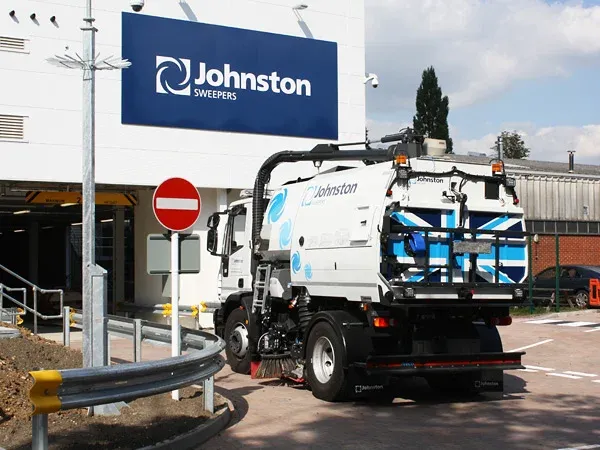
Johnston Sweepers has manufactured road sweepers in Dorking, Surrey, for more than 75 years, establishing itself as one of the world's leading manufacturers of British-designed and built street cleansing vehicles. At the time of the project, the company exported more than 70% of its sweeper production to over 80 countries worldwide, with established markets including the UK, North America, Australia and the Middle East.
As part of a planned restructuring programme, Johnston Sweepers invested £11 million in a new factory wing at its Dorking site, consolidating three UK manufacturing plants. The facility was designed to become one of Europe's most modern sweeper manufacturing operations, incorporating new technology and assembly flow lines to improve efficiency and quality.
The development included a new finishing plant with shot blasting booths, painting booths and modern paint application equipment, all served by an overhead conveyor system.
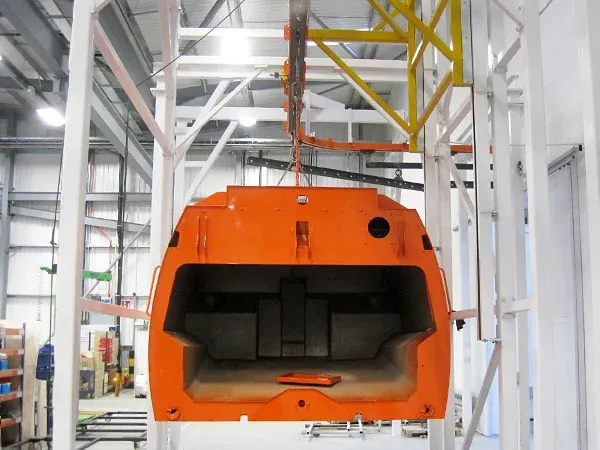
A key requirement was the ability to load and unload sweeper bodies weighing up to 2,000 kg and move them manually around the finishing plant using a series of conveyor switch junctions.
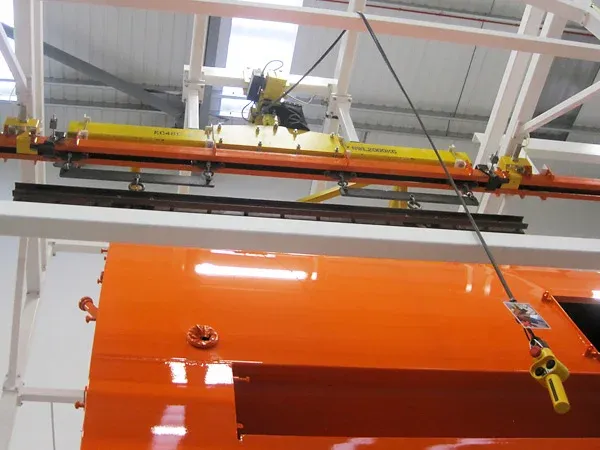
Amber Industries proposed an ATFT500 conveyor system, with each master load bar connected to four trolleys to support the sweeper body. The load bar was specially developed with adjustable hook positions, allowing operators to accommodate different sweeper models.
To demonstrate how easily the heavy loads could be manoeuvred, Amber Industries constructed a test track at its factory. The Johnston Sweepers project team was invited to assess the effort required to push or pull loads weighing up to 2,000 kg. The trials gave Johnston Sweepers the confidence to proceed with the installation.
The proposed operating sequence was straightforward. Each sweeper body would be loaded onto the conveyor using a loading drop section, which lowered the track to allow the operator to attach the product. The suspended body would then be pushed into one of two shot blasting booths for manual surface preparation.
Following shot blasting, operators would move the sweeper body through conveyor switch points into one of four paint application booths.
Once painting and drying were complete, the finished sweeper body would be unloaded using a drop section positioned after the final booth. The empty trolley assembly would then be returned, ready for the next product.
"I was very pleased with the conveyor system installed by Amber Industries and with the professional way that they conducted themselves throughout the project." said Amin Ferdowsian, Manufacturing Technology Manager at Johnston Sweepers.