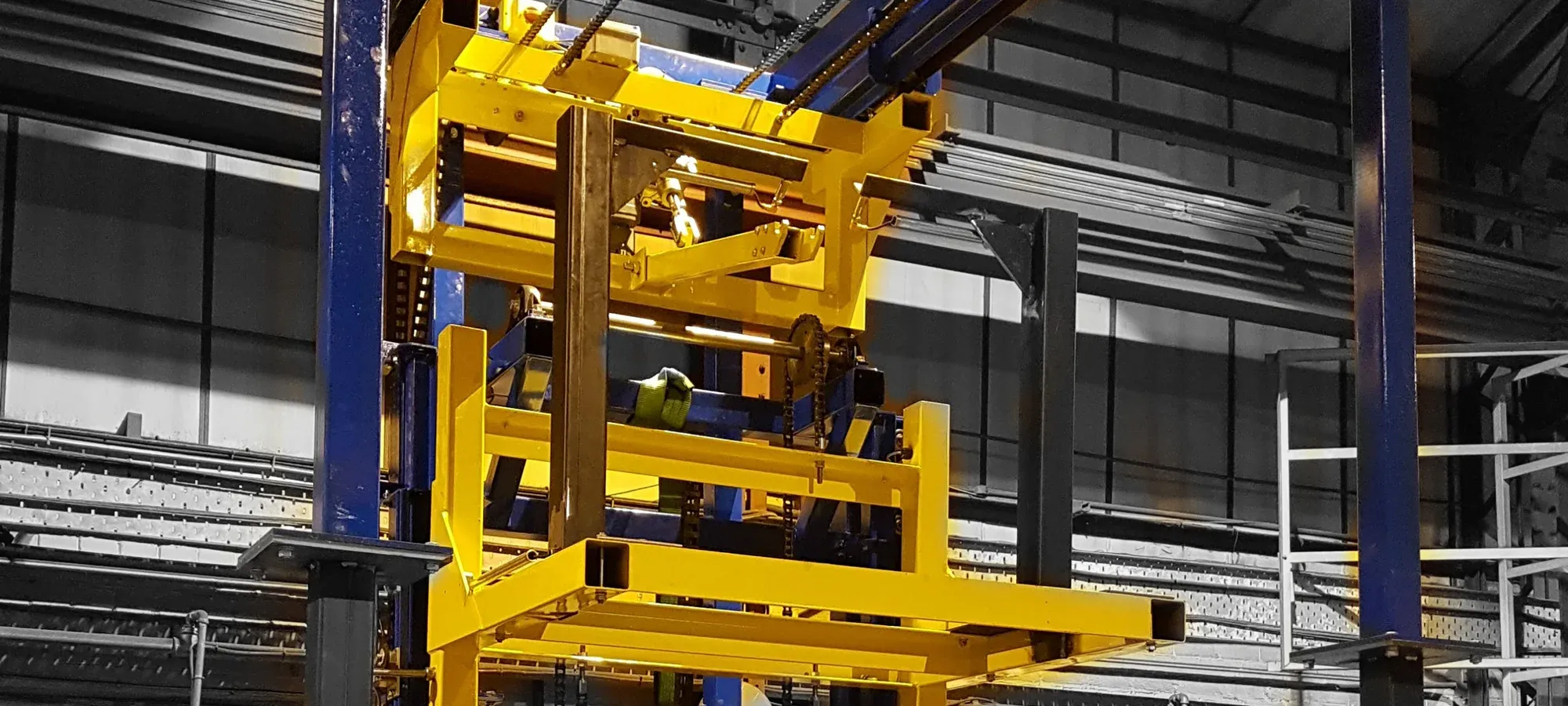
Lifting and Lowering Elevator Units for Warehouses
In warehouses where floor space is often at a premium, mezzanine floors provide additional storage and operational areas. Where two or three levels are in use, lifting and lowering equipment is required to transfer palletised product loads between floors.
As available floor space is often restricted, inclined belt conveyors may not be a practical option. In these circumstances, elevators and lowerators provide a solution for moving loads vertically between different levels.
Types of Lifting and Lowering Elevators
Several types of elevator and lowerator are available, including reciprocating platform elevators and continuous platform elevators, sometimes referred to as paternoster systems. Although their operating mechanisms differ, both provide a means of transferring loads between different elevations.
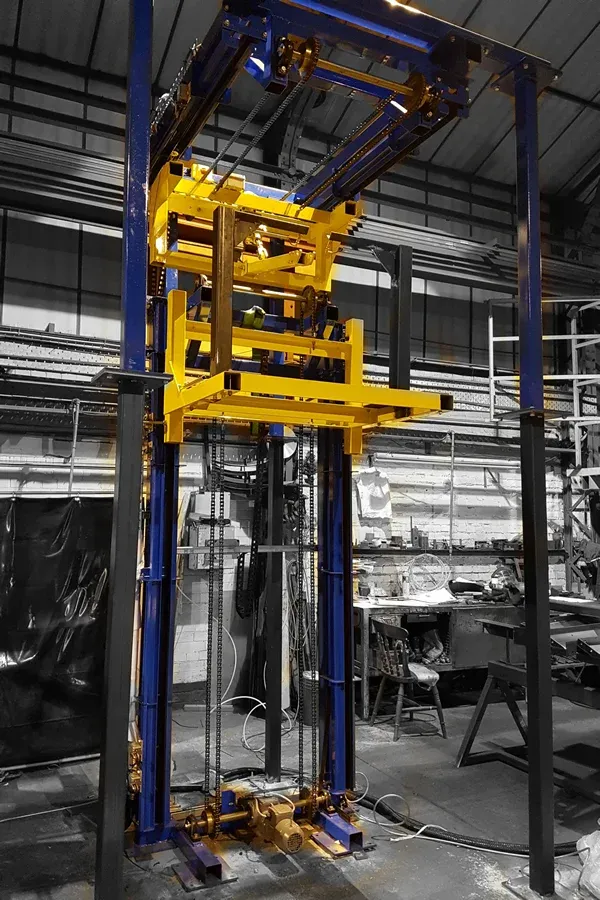
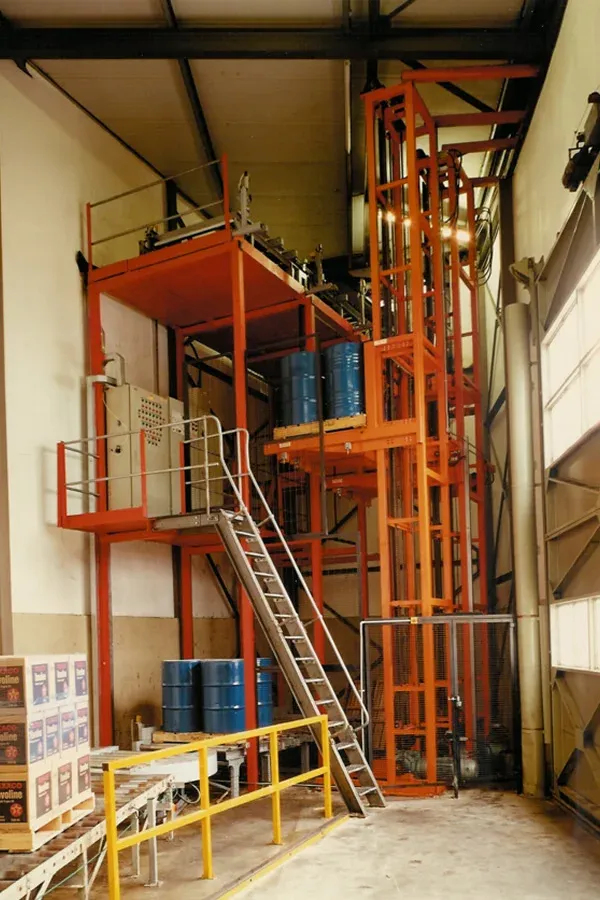
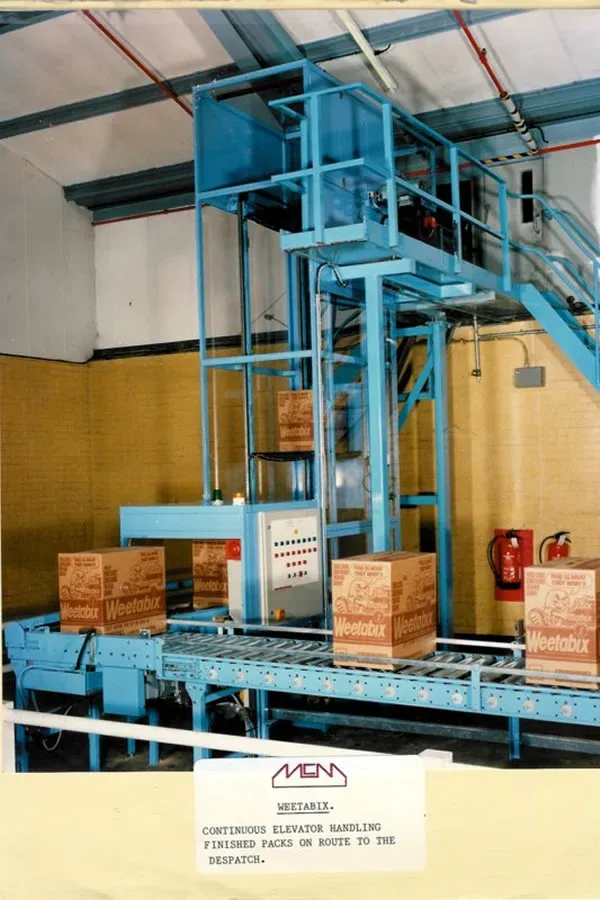
How Lifting Elevator Units Work
In an automated conveyor system, a product load arrives on an incoming conveyor and is automatically transferred onto the elevator or lowerator.
The equipment then moves the load to the required elevation before automatically discharging it onto another conveyor for transportation to its next destination.
Amber Industries' engineering team has experience designing lifting and lowering equipment for a range of common industrial materials handling applications.
Lifting Elevator Units in Operation
Frequently Asked Questions About Lifting Elevator Units
Lifting and lowering elevator units are used to transfer products or palletised loads between different floor levels in warehouses and industrial facilities. They are particularly useful where mezzanine floors create a need for vertical materials handling.
An inclined conveyor requires sufficient horizontal space to accommodate the change in elevation. In warehouses where floor space is restricted, a lifting elevator may provide a more practical way to transfer loads between levels.
A reciprocating platform elevator moves loads between levels using a platform that travels up and down. A continuous platform elevator uses a circulating arrangement of platforms to move products between elevations. The appropriate type depends on the application and handling requirements.
Yes. Lifting and lowering elevator units can be used to move palletised product loads between warehouse floors and mezzanine levels. The equipment must be designed to accommodate the dimensions, weight and handling requirements of the loads involved.
Yes. In an automated conveyor installation, a load can arrive on an incoming conveyor, transfer onto an elevator, move to the required level and discharge onto another conveyor for onward transportation.
Amber Industries has experience designing lifting and lowering equipment for industrial materials handling applications. The most suitable arrangement depends on factors such as available space, the number of levels, load characteristics and the required conveyor connections.